
Chintakindi Mallesham – Asu‑Machine

I wrote this story because I keep meeting people who believe impact needs a million-dollar pitch deck. A tenth-grade weaver from Telangana just proved them wrong. Read on for 600 words of low-tech magic, a mother’s pain-free shoulder, and a build-list you can copy-paste into any craft cluster tomorrow.
—Prabodh

A tenth-grade weaver from Telangana, a mother’s aching shoulder, and a cam the size of a laddoo—together they cut 6 hours of painful labour to 90 quiet minutes.

Scroll down for the full story, a parts-list you can copy, and proof that you don’t need a unicorn valuation to create life-changing tech.

In a cramped shed behind Sharjipet village, a young man watches his mother, Laxmi, wince after every one of the 9,000 arm circles it takes to prepare a single Pochampally sari. By 1999 he will have turned those circles into one smooth, 90-minute glide.

The Small Idea

A hand-cranked, motor-assisted “asu” frame that winds 4,500 metres of silk onto pegs in the time it takes to drink two cups of tea.

The Big Impact

Across Nalgonda and Warangal districts, women once locked into six-hour marathons of pain now run micro-enterprises: 800 machines, 10,000 revived looms, and weaver families whose loom counts jumped from four to forty in three monsoon cycles.

The Pochampally sari is born twice: first in dye, then in motion. Before the coloured threads ever meet the loom, they must be wound—thread by thread—around wooden pegs in a semi-circle wide enough for a woman’s outstretched arm. The local name for this pre-loom ballet is ‘asu’. One sari yields approximately 9,000 swings. Two saris a day, 18,000 swings. By the age of forty, most women have shoulders that creak like old teak doors.

Chintakindi Mallesham, a tenth-grade dropout who had never seen the inside of an engineering college, decided the creaking had to stop. He began with a bamboo frame, a cycle sprocket and the stubbornness of someone who has watched pain up close. Between 1992 and 1998 he earned, saved, melted, recast and re-earned whatever he could. Neighbours laughed; banks shrugged. Each prototype failed a little differently: threads snapped, pegs wobbled, and motors overheated.

The hinge came on an ordinary February afternoon in 1999. 

While repairing a power-looming unit in Balanagar, Mallesham noticed how a simple cam-and-lever movement could mimic the human wrist’s twist around each peg. He skipped lunch that day, skipped wages too, and walked home with a fist-sized steel cam in his pocket. That night the first Laxmi Asu machine—named, of course, after its first beneficiary—spun a flawless 90-minute Asu. Laxmi herself used it for the next sari and felt, for the first time in decades, no fire in her shoulder.

Word spread faster than monsoon rain. By 2001, sixty machines dotted the weaving hamlets. Steel replaced wood, microcontrollers replaced guesswork, and noise dropped 90%. 

Lingamma, a widowed mother of two, mortgaged her nose ring to buy the seventh unit. She began charging ₹300 per sari for asu services. 

Fifteen years later, she owned a pucca house, two engineering graduate daughters, and a second machine. Multiply Lingamma by the hundreds, and you begin to sense the quiet earthquake Mallesham set off.
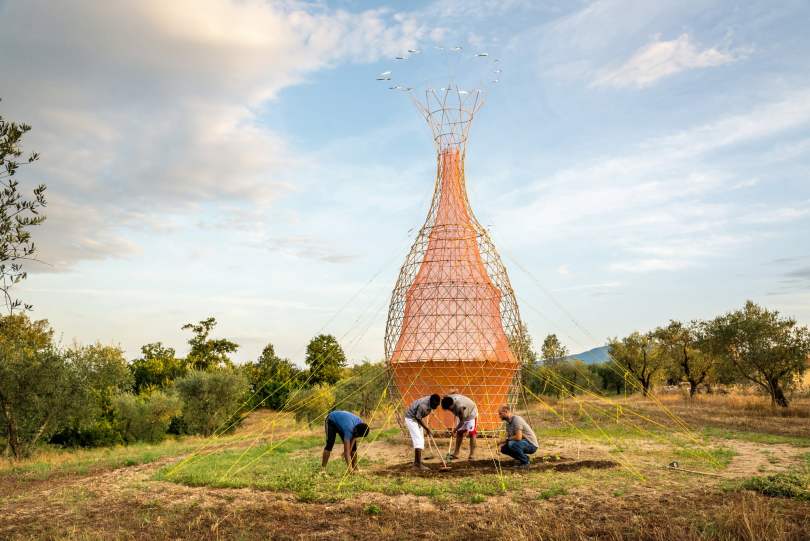
Warka Water Tower: Harvesting Drinking Water from Thin Air

In many rural and arid parts of the world, access to clean drinking water is a daily struggle. For countless families, it means walking miles under a harsh sun, queuing up at unreliable water points, or depending on unsafe sources. It is in this everyday hardship that the Warka Water Tower finds its quiet purpose – and profound relevance.

Inspired by nature and tradition, the Warka Water Tower offers an elegant solution to a complex problem. Created by architect Arturo Vittori, the tower is named after the Warka tree of Ethiopia – a revered fig tree that serves as a natural gathering spot for communities. Much like its namesake, the Warka Tower is more than just a structure – it is a place of sustenance, dignity, and connection.

Standing nearly 10 meters tall, the tower is constructed from natural and locally available materials such as bamboo, jute rope, and mesh. At its core lies a simple yet powerful principle: condensation. As humid air passes through the mesh, it cools, condenses, and forms droplets. These droplets trickle down into a basin at the base – providing as much as 100 litres of drinking water per day under ideal conditions. No electricity, no moving parts. Just thoughtful design rooted in natural processes.

But what elevates the Warka Water Tower from a clever invention to a meaningful innovation is its human-centred design. It’s not parachuted in as a finished product – it’s built by the community. Its parts are low-cost, biodegradable, and easy to assemble. Its maintenance is minimal. In that simplicity lies its strength.

There’s something poetic about it too. Its silhouette – graceful and organic – blends with the landscape. It’s not an intrusion but an inclusion. People don’t just collect water here; they gather, converse, and reclaim their time and well-being.

For me, the Warka Water Tower is a textbook case of a Small Idea with a Big Impact. It doesn’t rely on high technology or vast capital. Instead, it draws upon context, compassion, and creativity. In doing so, it shows us a better way – where innovation respects local wisdom, enhances lives, and leaves a light footprint.

As climate change makes water scarcity more widespread and urgent, we’ll need more such low-tech, high-impact solutions. The kind that quietly transforms. The kind that belongs.

India’s Deep Tech Challenge: Commerce Minister Calls for Innovation Reset

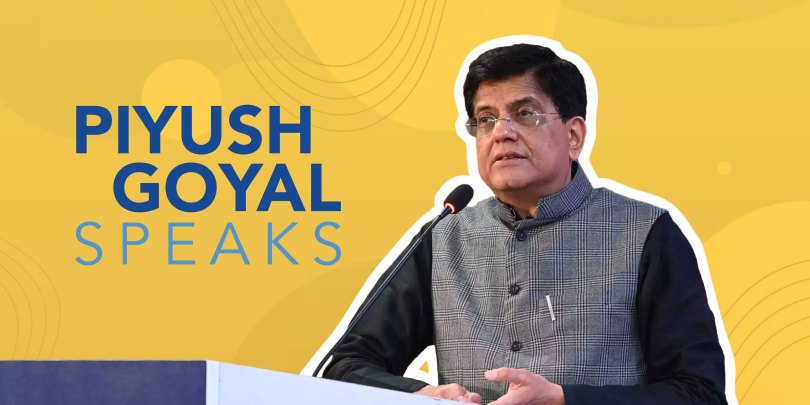
My article on Piyush Goyal’s Speech at Starup Mahakumbh 2025

In a speech that has sparked widespread debate across India’s business landscape, Commerce Minister ​Shri Piyush Goyal delivered what many perceive as a wake-up call to the nation’s burgeoning startup ecosystem. Speaking at Startup Mahakumbh 2025 in New Delhi, Goyal challenged entrepreneurs to pivot from service-oriented businesses toward deep technology innovation—a message that, while pointed, underscores a strategic vision for India’s technological future.

“We need more deep-tech startups in India,” ​Shri Goyal emphasized, drawing comparisons between India’s current focus on food delivery platforms versus China’s advancements in semiconductors, electric vehicles, and robotics.

While his comments initially drew criticism for appearing dismissive of gig economy startups, the minister’s broader message highlighted the necessity for technological self-reliance.

“The minister’s words shouldn’t be taken as criticism but as a challenge to engineers and technologists,” noted Zoho founder ​Shri Sridhar Vembu. “What we need are smart engineers who roll up our sleeves and get it done. We can do this.”

India currently boasts over 1.57 lakh government-recognized startups and more than 100 unicorns, establishing itself as the world’s third-largest startup hub. However, ​t​he Minister questioned whether these impressive numbers translate to meaningful technological advancement.

The debate reflects a critical junction for Indian innovation. While service-oriented startups have created significant employment opportunities and addressed urban needs, deep tech ventures represent just a fraction of the ecosystem, with ​Shri Goyal citing approximately 1,000 such startups nationwide.

Despite the controversy, ​Shri Goyal’s speech was a balanced one. While it might sound like he ​w​as dismissal of current achievements, ​i​t was actually a call for their evolution​.

Eternal.com: A Masterclass in Strategic Domain Acquisition

Timeline visualization of Eternal.com acquisition and corporate rebranding process

In the digital age, a domain name is more than just a web address—it’s a strategic asset. Eternal Limited’s acquisition of eternal.com demonstrates a level of strategic foresight that deserves analysis, particularly given my decades of experience in business and domain naming.

The Power of Direct .com Domains

The .com domain extension has maintained its supremacy in the digital landscape for several compelling reasons:

  1. Brand Authority: Direct .com domains (without prefixes or suffixes) are the digital equivalent of prime real estate
  2. Global Recognition: The .com extension is universally recognized and trusted across markets
  3. Corporate Legitimacy: Most Fortune 500 companies own their direct .com domains, setting a global standard

Strategic Implications of Eternal.com

The acquisition of eternal.com aligns with practices followed by global industry leaders. Consider these examples:

  • IBM owns ibm.com
  • Honda owns honda.com
  • Apple owns apple.com

This puts Eternal Limited in the same league as these global corporations from a digital identity perspective.

Beyond Just a Domain Name

The acquisition of eternal.com represents more than just a technical requirement for the corporate rebranding. It demonstrates:

  • Long-term Vision: Securing a premium generic domain shows commitment to building a lasting legacy
  • Strategic Planning: The domain acquisition preceded public announcement of the name change, showing careful preparation
  • Investment in Digital Identity: Premium domain names are significant investments, reflecting confidence in the brand’s future

The Value Proposition

While the actual acquisition cost remains undisclosed, premium generic .com domains often command seven or eight-figure prices. The investment, however, should be viewed in the context of building a global digital identity that will serve the company for decades to come.

This article is part of a series analyzing Eternal Limited’s corporate transformation. Read our previous piece on the corporate structure change [here].

The Corporate Evolution of Zomato Limited to Eternal Limited

Zomato Limited Transforms to Eternal Limited: Understanding the Corporate Evolution

In a significant corporate development, Zomato Limited has announced its transformation to Eternal Limited. This change, however, comes with an important distinction that warrants clarity: while the parent company’s name is changing, the consumer-facing brands remain unchanged.

The Corporate Structure

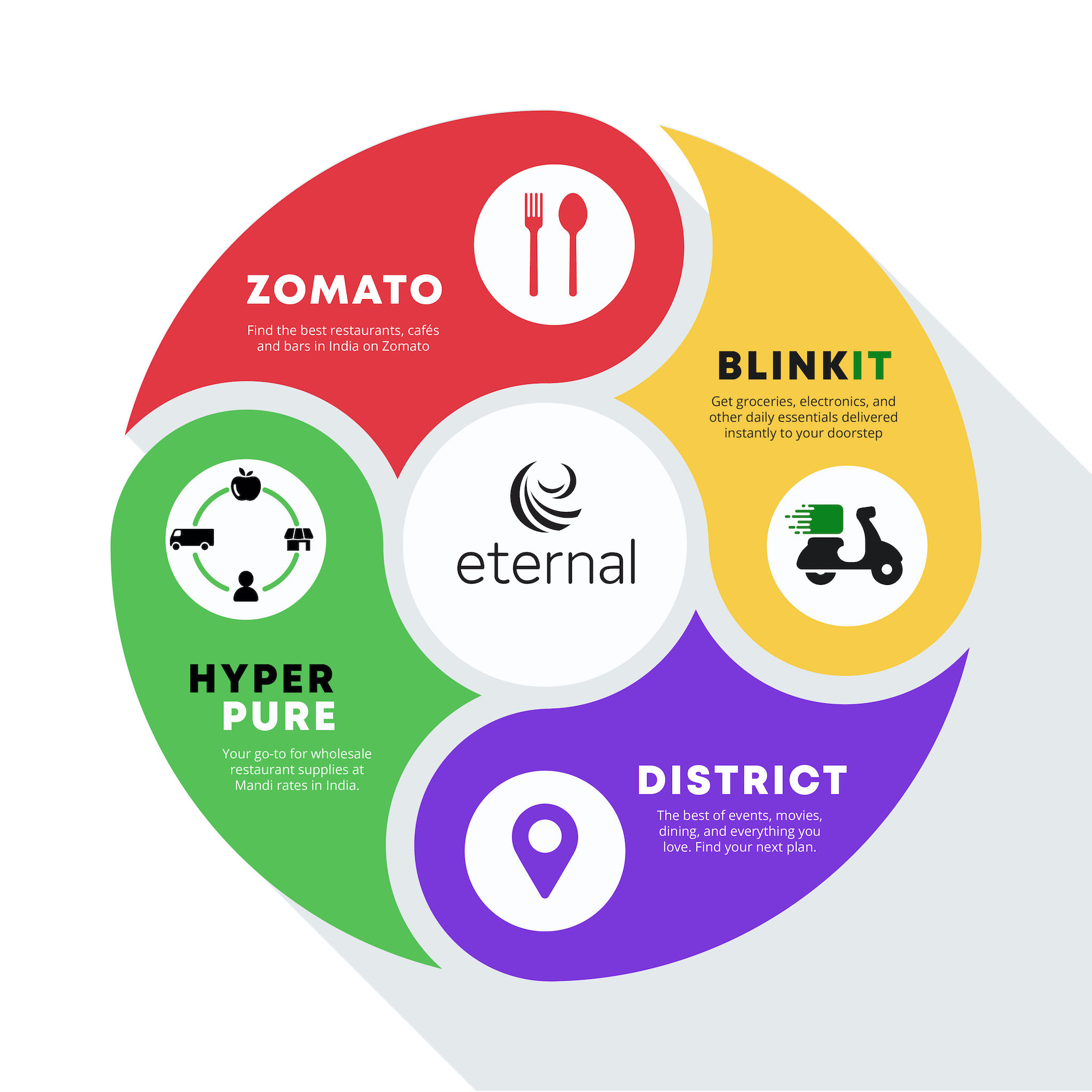
The renamed Eternal Limited presently runs these four consumer-facing brands: Zomato, Blinkit, Hyperpure and District.

Eternal Limited now stands as the parent company, stewarding a portfolio of distinctive brands that have become household names in India:

  1. Zomato: The flagship food delivery platform continues to operate under its well-established brand identity
  2. Blinkit: The quick commerce platform delivering everyday essentials
  3. Hyperpure: A B2B platform revolutionizing the supply chain of high-quality food ingredients
  4. Going Out / District: A platform facilitating the discovery and ticketing of offline experiences

Strategic Implications

This corporate rebranding reflects Eternal Limited’s evolution beyond its origins as a food delivery company. The new name acknowledges the company’s expanded scope and diverse business interests, while maintaining the strong brand equity of its individual services.

What This Means for Stakeholders

For customers, the experience remains unchanged – they will continue to interact with the same beloved brands they’ve always known. The Zomato app, Blinkit’s quick deliveries, and other services will maintain their distinct identities and operational independence under the Eternal Limited umbrella.

The transformation to Eternal Limited represents not just a name change, but a strategic repositioning that better reflects the company’s broader vision and diverse business portfolio. As the company continues to evolve, this new identity provides a foundation for future growth while honoring the strength of its established brands.

This article is part of a series analyzing Eternal Limited’s corporate transformation. Stay tuned for our next piece examining the significance of the eternal.com domain acquisition.

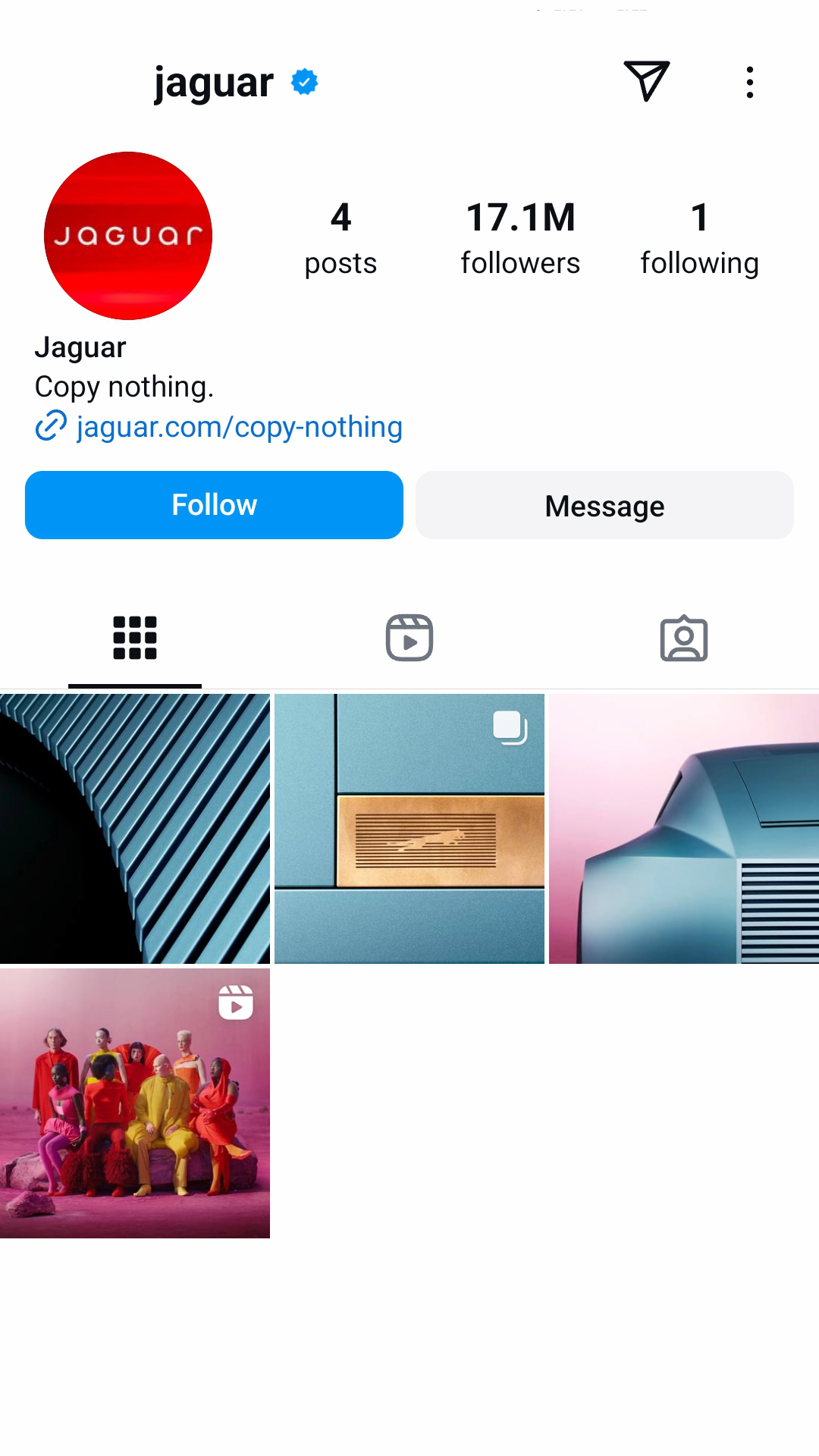
The Jaguar brand redesign and update is a bold step.

JaGuar’s Bold Rebrand: A Strategic Leap into the Future

Jaguar redesigned logo and brand update is a necessary and bold step.

In the world of luxury automotive branding, few moves have been as audacious as JaGuar’s recent rebranding initiative. As someone who has spent over three decades in the branding industry, I find myself intrigued by the boldness of this strategic pivot that has set the automotive world abuzz.

The luxury carmaker’s decision to completely reimagine its brand identity – from its iconic leaping jaguar to its very name styling (now “JaGuar”) – represents more than just a visual overhaul. It’s a calculated gambit to reposition the brand for an electrified future, even if it means challenging nearly a century of heritage.

Jaguar's willingness to start with a clean slate, is exemplified by the deletion of their entire social media history.

What’s particularly fascinating is the brand’s willingness to start with a clean slate, exemplified by the deletion of their entire social media history. This move, while shocking to many, signals an unwavering commitment to their new direction.

Drawing parallels to other rebranding “failures” misses a crucial point: each brand’s journey is unique. The success or failure of previous rebranding efforts by other companies cannot predict JaGuar’s fate. What matters is the strategic thinking behind the move and the consistency of its execution moving forward. The brand’s design chief, Gerry McGovern, acknowledged that the new direction would “shock, surprise and polarize.” This wasn’t an oversight – it was the intent. In today’s cluttered marketplace, generating conversation is half the battle. The 500% increase in online searches for the brand suggests they’ve already achieved this initial objective.

With captions such as "delete ordinary" and "copy nothing", Jaguar's new campaign has electrified audiences worldwide.

The promotional campaign, with its vibrant aesthetics and abstract narrative, has predictably divided opinion.

What critics might be overlooking is that JaGuar’s target audience isn’t necessarily their current customer base. The luxury automotive landscape is shifting rapidly, with electric vehicles and changing consumer preferences reshaping the market. JaGuar appears to be positioning itself for this future, even if it means potentially alienating some traditional customers in the short term.

As we approach the December 2024 concept car reveal in Miami, it’s crucial to remember that this rebranding is just the first step in what will likely be a longer transformation journey.

From my perspective, JaGuar’s brand managers deserve the space and time to execute their vision. While the risks are significant, so too are the potential rewards. In an industry where playing it safe often leads to irrelevance, JaGuar’s willingness to take such a decisive step might just prove to be their masterstroke.

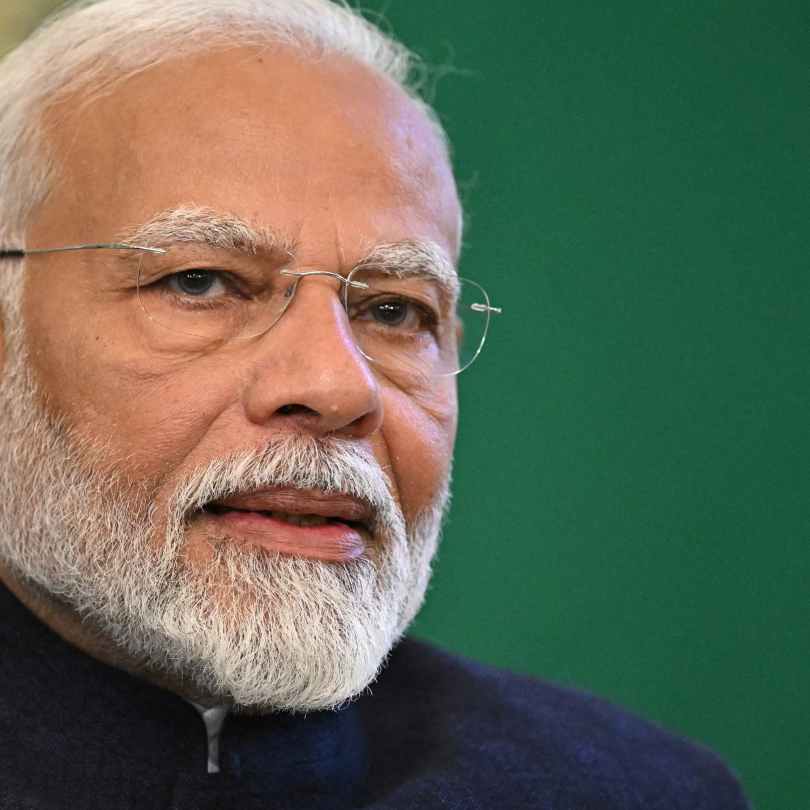
PM Modi outlines nine key resolutions and requests for India's future development and civic responsibility

PM Modi’s 9 Requests

See PM Modi’s video here: bit.ly/pm-modi-9-requests

Prime Minister Shri Narendra Modi put forth nine resolutions (sankalp) and as many requests (aagraha) before people, urging them to work towards fulfilling them.

1. Save every drop of water and make more and more people aware about water conservation.

2. Go from village-to-village and make people aware about digital transactions, teach them about online payment.

3. Work to make your village, your locality, your city number one in cleanliness.

4. Promote local, local products as much as possible, use only Made in India products.

5. As much as possible, first see your own country, travel around in your own country and if you want to go to another country, then you should not feel like going abroad until you have seen the whole of India. PM Modi said “And these days, I keep telling even big rich people that why are they getting married at destinations in foreign countries, so I said ‘Wed in India’, ‘Get married in India’

6. Keep making farmers more and more aware about natural farming. This is a very important campaign to save Mother Earth.

7. Include Millets as Shri-Ann in your daily eating life, promote it widely, it is a super food.

8. Be it fitness, yoga or sports, make it an integral part of your life.

9. Be a supporter of at least one poor family, help them. This is necessary to remove poverty in India.

Here’s a graphic, A3 size, printable downloadable PDF file:

What is the difference between buying a product from a retail store and online?

This is my answer on Quora.com to the question

What is the difference between buying a product from a retail store and online?

Am going to answer this question.

I run a business having an online store and a retail store.

Therefore, am qualified to answer it.

The business is Sarangi, the Kanjivaram sari store.

The retail store is in Mylapore, Chennai in south India.

The online store is at www.sarangithestore.com.

Retail and online offer different propositions to the customer.

Retail buying experience is, of course, direct.

You can touch and feel the product.

If apparel, you can try it on.

If crockery, you can hold it in your hands. Quickly assess its properties like size and weight.

If furniture, you can sit on it. The entire family can try it out.

There are exceptions to each of these, of course.

For food retail, as in restaurant dining, well, you know.

For cars, you can test drive it.

There’s great joy in shopping in a store or a mall.

It’s an experience; it could be therapeutic. We can make use of the six senses to better assess the product.

For online, the sense of smell cannot be evoked / made use of with current browsers.

When you come to Sarangi the store, you’ll be personally greeted and seated.

You’ll be surrounded by greenery.

We’ll probably offer you water and coffee.

Online buying experience is indirect or virtual.

You can’t touch and feel the product.

Which works fine for things you know about.

Such as packaged food, mobile phones and travel tickets.

All of us are happier to not have to stand in a queue to buy train tickets.

Online you have access to a vast inventory of products.

From many merchants all at once.

You can discover stuff in Pinterest and instantly visit the merchant.

There’s an instant-ness in shopping online.

You are moving at electron speed.

Online merchants are constantly improving things to make shopping easier.

Product photography has been constantly evolving.

Product listings have been improving.

Better search makes it easier to find what you want.

Better filters make product discovery easier.

www.sarangithestore.com provides a filter which makes it easier to look for the saree you want. You can go fairly granular, for example, with filter options for motifs and even for border colour.

Shopping online can be a great experience, too.

I personally know people shopping for wedding sarees where a dozen or so family members are located in various parts of the world. In Singapore. In California, USA. In Canada. Simultaneously shopping at www.sarangithestore.com by sharing links via WhatsApp chat. Comparing sarees. Shortlisting them. And making their selections.

Though online has also affected many products themselves.

Books have been visibly affected.

In the near future, printed books will disappear in favour of online reading.

Only some types of speciality books will be physically printed.

Notice how, these days, there are no printed user manuals accompanying electronic gadgets.

Online and retail offer different value propositions and varied experiences.

Considered together, it’s a fabulous time to be a shopper.

Whether online.

Or in store.

Find Something to Get Excited About.

Find something to get excited about by Danielle LaPorte

Have been receiving nuggets of actionable wisdom via Danielle LaPorte’s newsletter. The above quote – find something to get excited about – is an example. As a long-time student of self-help information, digested tons of material starting with Dale Carnegie back in my student days, to Dr. Wayne Dyer, Og Mandino, Tony Robbins and many more. Gained insights from each author’s writings and owe a lot to them.

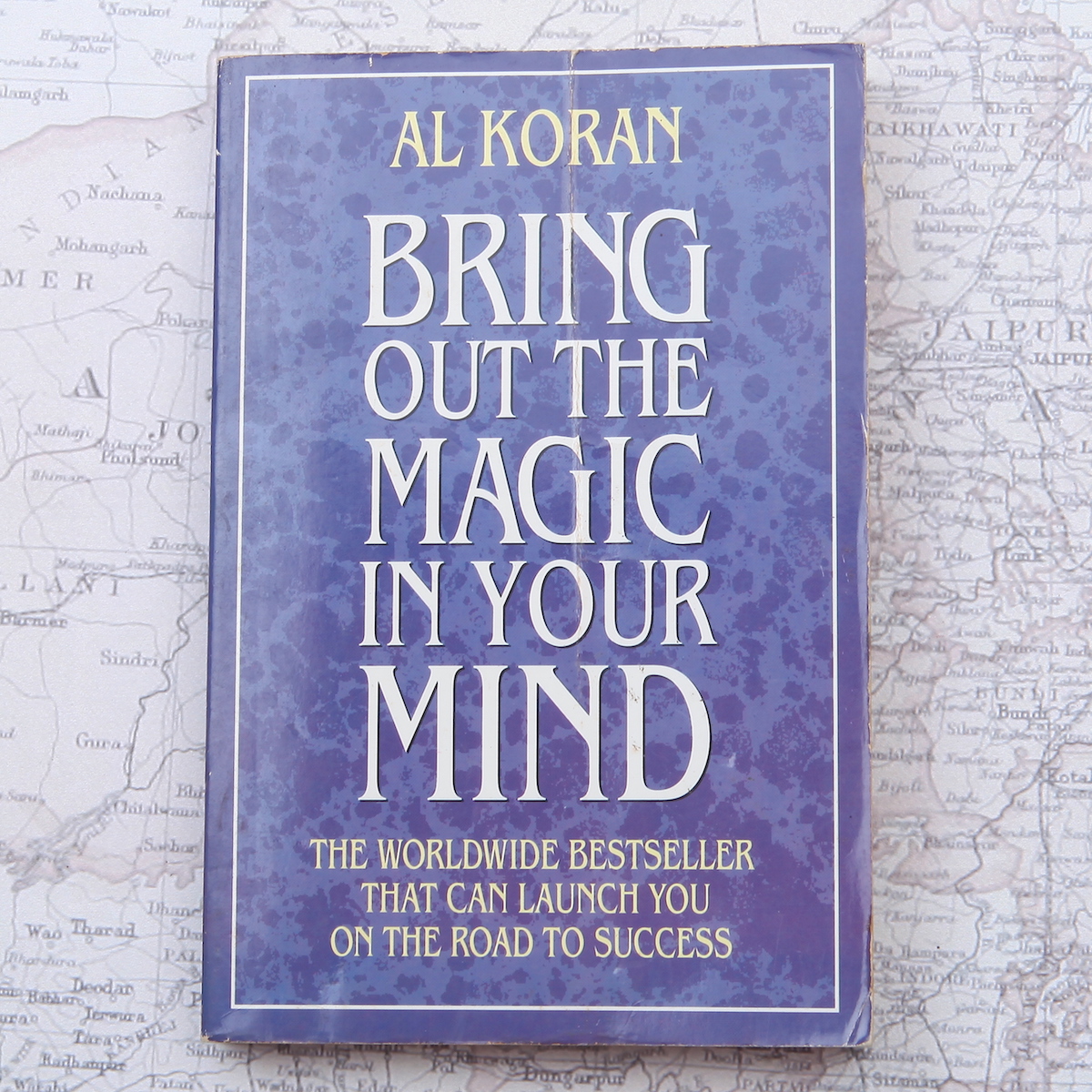
Bring out the Magic in your Mind by Al Koran

Danielle’s writings have a freshness quality about them which – to me – makes it very accessible. Check out her work at daniellelaporte.com.

Yes, find something to get excited about!